

Shopping for a new air fryer used to mean comparing wattage and basket size. Now the decision tree has grown: some models put the heating element at the bottom of the cooking chamber instead of the top, some are built around a slide-out drawer rather than a flip-up basket, and some solve the age-old “where do I stash the cord” problem with a fold-away cord compartment. Each of these features solves a different everyday annoyance, and none of them is universally “better” than the others – they simply suit different kitchens, cooking styles, and storage constraints.
This guide breaks down what each feature actually does, who benefits most from it, and how to decide which one (or which combination) fits your kitchen. We will not be reviewing specific models in depth – instead, think of this as a decision framework you can use before you start comparing individual products.
Why This Decision Is Confusing
Air fryer marketing tends to lump features together under vague labels like “compact,” “family-size,” or “smart.” But bottom heat, fold-away cords, and drawer-style design are three genuinely separate engineering choices that solve three separate problems:
- Bottom heat is about how the appliance cooks food – where the heating element sits relative to the basket.
- Fold-away cords are about storage and counter tidiness – how the appliance behaves when it is not plugged in or is being tucked into a cabinet.
- Drawer-style is about the physical form factor of the cooking chamber – a horizontal pull-out drawer instead of a top-loading or flip-open basket.
Because these are independent design choices, some appliances combine two or even all three. Understanding each one individually is the first step to figuring out which combination you actually need.
What “Bottom Heat” Air Fryers Actually Do
Most air fryers position the heating element and fan at the top of the cooking chamber, blowing hot air downward through the food basket. This works well for most foods, but it means the food closest to the heat source (the top layer) tends to crisp faster than food sitting lower in the basket.
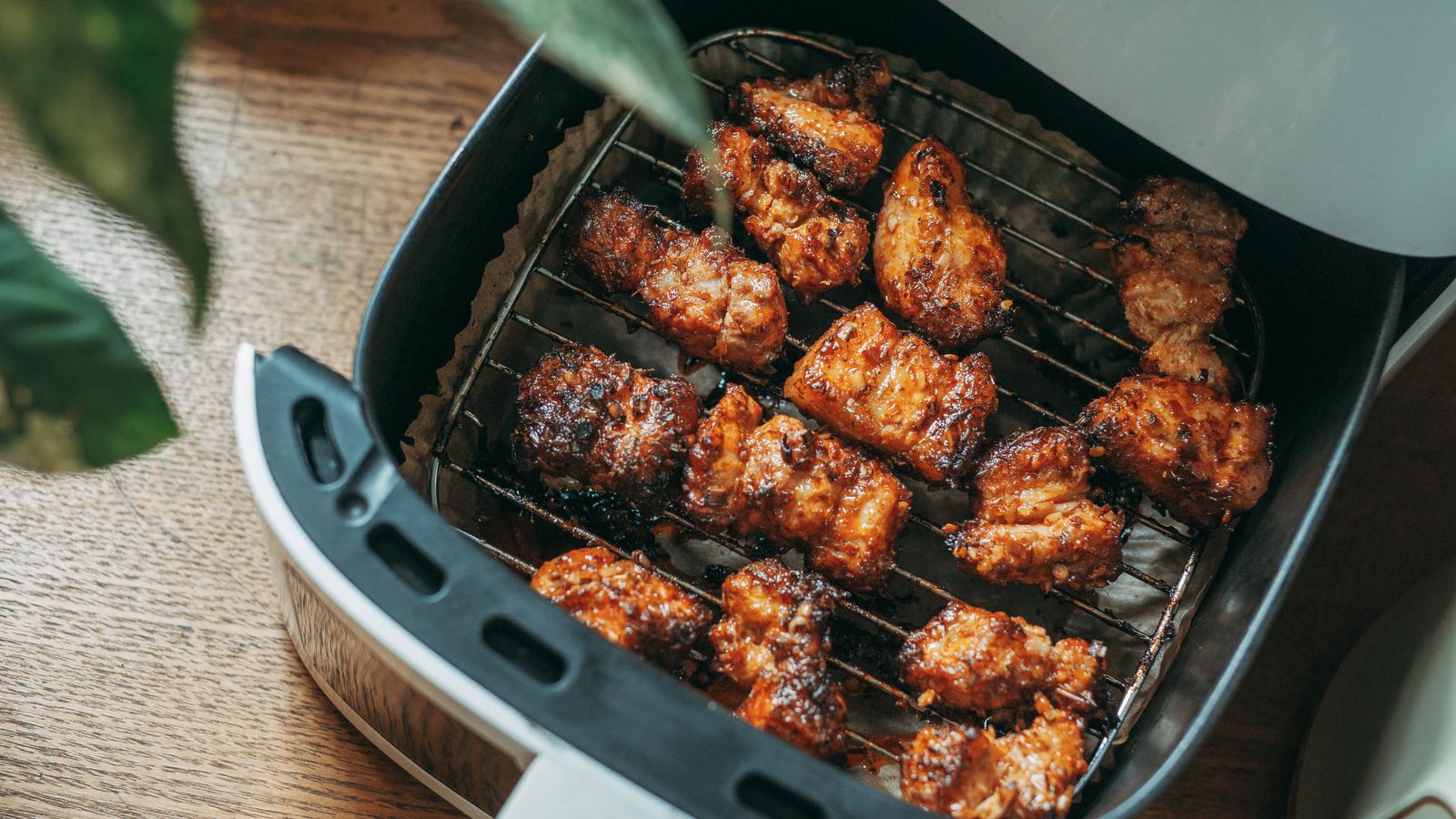
Bottom-heat air fryers flip this arrangement, placing the heating coil beneath the basket or tray. This design mimics a griddle or stovetop more closely and is especially good at:
- Searing the underside of foods like burger patties, steaks, or thick-cut vegetables.
- Producing an even, deep-brown crust on foods that sit flat, like hash browns or fish fillets.
- Reducing the need to flip food halfway through cooking, since the bottom does most of the crisping work.
If you frequently cook foods that benefit from a strong sear on one side – steaks, breaded cutlets, flatbreads – a bottom-heat model is worth prioritizing. You can compare dedicated options in our roundup of air fryers with bottom heat.
What “Fold-Away Cord” Air Fryers Solve
This feature has nothing to do with cooking performance and everything to do with daily convenience. A fold-away (or wrap-around) cord design includes a built-in channel, hook, or recessed compartment on the base or back of the unit where you can coil the power cord instead of letting it dangle or trail across the counter.
This matters most if you:
- Store your air fryer in a cabinet or pantry between uses rather than leaving it permanently on the counter.
- Have limited counter space and need to slide the appliance in and out frequently.
- Have kids or pets in the kitchen and want to minimize dangling cords as a tripping or pulling hazard.
- Simply prefer a tidy, cable-free look on your countertop.
Fold-away cord storage is a small quality-of-life detail, but for anyone who moves their appliance in and out of storage weekly, it removes a genuinely annoying friction point. Browse dedicated picks in our guide to air fryers with fold away cords.
What Drawer-Style Air Fryers Offer
Drawer-style air fryers are the most common form factor on the market – think of the classic pull-out basket that slides horizontally out of the unit, similar to opening a small oven drawer. This is distinct from bucket-style models where you lift the entire basket out vertically, and from oven-style models with a hinged door.
Drawer-style units tend to offer:
- Easy, one-handed access for shaking or checking food mid-cook without lifting anything.
- A sturdy, stackable footprint that sits flat on the counter.
- Simple non-stick basket-and-tray combinations that are dishwasher-friendly.
- A familiar, intuitive operation for anyone upgrading from a basic single-basket fryer.
Drawer-style is generally the safest, most beginner-friendly choice if you are not sure which format you prefer, since it is the most widely supported format with the largest range of accessories. See our full list of drawer style air fryers if this sounds like the right fit.
Side-by-Side: How the Three Features Compare
- Bottom heat – affects cooking results (searing, crust, even browning). Best for: steak, burgers, fish, flatbreads.
- Fold-away cord – affects storage and countertop tidiness. Best for: small kitchens, cabinet storage, households with kids or pets.
- Drawer-style – affects physical handling and ease of use. Best for: first-time buyers, families, anyone wanting a familiar and simple design.
Notice that these categories are not mutually exclusive. A drawer-style air fryer can also have bottom heat and a fold-away cord – the three features simply describe different parts of the same appliance, so your “ideal” unit may check more than one box.
Matching the Feature to Your Cooking Habits
You cook a lot of proteins that need a strong sear
Prioritize bottom heat. If you regularly make burgers, steaks, pork chops, or thick fish fillets, the difference in crust quality between top-heat and bottom-heat models is noticeable within the first few uses.
You have a small kitchen or store appliances away between uses
Prioritize a fold-away cord. Combined with a compact drawer-style footprint, this makes daily storage and retrieval far less of a hassle, especially in apartments or RVs.
You are buying your first air fryer
Prioritize drawer-style. It is the most forgiving, easiest-to-clean, and easiest-to-understand format, and it will not require you to relearn cooking times from scratch the way some bucket or oven-style units do.
You batch-cook for a family
Look for a larger drawer-style unit, and treat bottom heat as a bonus if you also cook a lot of seared proteins. Cord storage becomes less important if the unit lives permanently on the counter.
Budget Considerations
None of these three features is inherently a “premium” or “budget” feature on its own, but a few patterns are worth knowing before you shop:
- Fold-away cord storage is usually a low-cost manufacturing addition and appears across a wide range of price points, including budget-friendly models.
- Bottom-heat designs are somewhat less common and may appear more often on mid-range and higher-end units that also include multiple cooking modes (grill, roast, dehydrate).
- Drawer-style is the dominant, mainstream format, so you will find it at every price tier from entry-level to premium – it does not carry a price premium by itself.
If your budget is tight, decide on your single highest-priority feature (usually cooking performance, i.e. bottom heat, or storage convenience, i.e. fold-away cord) and treat the other as a nice-to-have rather than a dealbreaker.
Common Mistakes When Choosing Between These Features
- Assuming all air fryers heat the same way. Basket placement and airflow direction genuinely change how food browns – check whether a model is top-heat or bottom-heat before assuming performance will be identical to your old unit.
- Overvaluing cord storage if the unit lives permanently on the counter. If you never unplug or move the appliance, a fold-away cord is a nice detail but should not outweigh capacity or cooking performance in your decision.
- Assuming drawer-style means small capacity. Drawer-style units range from compact 2-quart models to large family-size baskets, so don’t rule the format out if you need to feed a crowd.
- Ignoring counter clearance for drawer-style units. Because the basket slides straight out, you need clear space in front of the unit, not just above it – measure your counter depth before buying.

A Quick Decision Checklist
- Do you cook proteins that need a strong sear on one side? If yes, lean toward bottom heat.
- Do you store the appliance away between uses? If yes, prioritize a fold-away cord.
- Are you new to air frying or want the simplest possible operation? If yes, choose drawer-style.
- Do you need more than one of these benefits? Look for models that combine features rather than assuming you must pick only one.
- What is your realistic budget? Rank your must-have feature first and treat the rest as bonuses.
Frequently Asked Questions
Is bottom heat better than top heat for air frying?
Neither is universally “better” – they simply produce different results. Bottom heat tends to sear and crisp the underside of food more aggressively, which suits proteins and flat foods, while top-heat designs are the traditional standard for general-purpose crisping of items like fries and nuggets.
Does a fold-away cord affect cooking performance?
No. Cord storage is purely a convenience and safety feature related to how the appliance is stored and handled, and it has no effect on airflow, heating, or cooking results.
Are drawer-style air fryers harder to clean than basket-style?
Generally no – most drawer-style units use a removable non-stick basket and tray that lift out of the drawer housing and are dishwasher-safe, making cleanup comparable to or easier than other formats.
Can I get all three features in one air fryer?
Yes. These are independent design choices, so it is common to find drawer-style units that also include bottom heat and a fold-away cord. If all three matter to you, look specifically for models that advertise all three rather than assuming they are mutually exclusive.
Which feature matters most for a first air fryer purchase?
For most first-time buyers, drawer-style format matters most because it is the easiest to learn and maintain. Bottom heat and fold-away cords are worth adding to your checklist once you know your specific cooking habits and kitchen storage constraints.
Final Thoughts
There is no single “right” answer between bottom heat, fold-away cords, and drawer-style design – the right choice depends entirely on how you cook and how you live with your kitchen appliances. If searing and crust quality matter most, start with air fryers with bottom heat. If tidy storage and easy cable management are your priority, look at air fryers with fold away cords. And if you want the simplest, most familiar format to start with, browse our list of drawer style air fryers. Whichever combination you land on, matching the feature to your actual cooking habits – rather than chasing every spec on the box – is the surest way to end up with an air fryer you will actually use every week.