
If your rugs slide across the floor, bunch up at the edges, or leave your feet feeling every hard seam underneath, the missing piece is usually not the rug itself – it is what goes beneath it. A rug underlay (also called a rug pad) is one of the cheapest, easiest upgrades you can make to any room, yet it is the step most beginners skip entirely. This guide walks you through exactly what a rug underlay does, the different types available, how to choose and install one correctly, and how to keep it working well for years.

What Is a Rug Underlay and Why Do You Need One?
A rug underlay is a thin layer of material – usually felt, rubber, foam, or a combination of these – that sits between your rug and the floor. It is not visible once the rug is in place, but its impact is felt every time you walk across the room. A good underlay does several jobs at once: it keeps the rug from sliding or curling, cushions your steps, protects the floor finish from scratches, and helps the rug lie flat instead of rippling at the edges.
Many first-time rug buyers assume a rug pad is an optional accessory, something you can add later if the rug turns out to be slippery. In practice, skipping it almost always leads to problems: rugs on hardwood or tile tend to migrate across the room, corners curl upward and become trip hazards, and the backing of the rug wears out faster because there is nothing absorbing the friction between rug and floor. If you have ever tripped on a rug edge or heard a rug “slap” against a hard floor when someone walks on it, that is a sign an underlay is overdue.
Beyond safety and stability, an underlay also extends the life of the rug. Without cushioning, foot traffic presses fibers directly against a hard, unforgiving surface, which accelerates matting and wear. A quality underlay absorbs some of that impact, so the rug’s pile stays fuller for longer. For anyone shopping for a new rug or refreshing an existing one, a browse through rug underlays is a sensible first stop before you commit to a size or material.
How a Rug Underlay Differs From a Rug Gripper
Beginners often confuse rug underlays with rug grippers, and while they solve overlapping problems, they are not quite the same product. A full rug underlay is a pad cut roughly to the size of the rug (usually an inch or two smaller on each side) that sits underneath the entire rug. A rug gripper, by contrast, is typically a set of smaller strips, dots, or corner pieces that you apply only at specific points – corners, edges, or seams – to stop slipping and curling without covering the whole underside of the rug.
If your main issue is a rug that shifts on tile or hardwood, or corners that curl up, a set of rug grippers can solve that on its own, especially for small rugs, runners, or layered rugs where a full pad would be bulky. But if you also want cushioning underfoot, floor protection, and noise reduction, a full underlay does more overall. Many households actually use both: a full-size underlay for cushioning and floor protection, with grippers added at high-traffic corners for extra insurance against curling.
Types of Rug Underlay Materials
Not all rug pads are built the same way, and the right one depends on your floor type, rug material, and how much traffic the room sees.
Felt Pads
Felt underlays are made from pressed natural or synthetic fibers. They add soft cushioning and a bit of insulation, and they work well under rugs on carpet or hard floors where slipping is not the main concern. Felt alone does not have strong grip, so it is often paired with a rubber layer.
Rubber Pads
Natural or synthetic rubber pads grip the floor firmly and are the best choice for preventing slipping on hardwood, tile, laminate, or vinyl. Look for rubber that is labeled safe for your specific floor finish, since some low-quality rubber can discolor or leave residue on certain hardwood coatings over time.
Felt-and-Rubber Combination Pads
These pads combine a felt top layer for cushioning with a rubber bottom layer for grip. This is the most common and most versatile choice for beginners, since it addresses cushioning, floor protection, and slip resistance in one product, and it works across most rug and floor combinations.
Foam and Waffle-Weave Pads
Lightweight foam or open waffle-weave pads are inexpensive and add basic grip and thin cushioning. They are a reasonable budget option for low-traffic rooms, but they tend to break down faster than felt-rubber combinations under heavy foot traffic.
How to Install a Rug Underlay: Step-by-Step
Installing an underlay is a simple project that most people can finish in under twenty minutes. Follow these steps for a clean, secure result.
- Clean the floor first. Sweep or vacuum the area thoroughly. Any dust, grit, or debris trapped between the pad and the floor can cause scratching over time, especially on hardwood.
- Measure the rug. Lay the rug flat where it will live, or measure it beforehand, and note both dimensions. Most underlays are sold in standard sizes (such as 5×8 or 8×10) or as rolls you cut to fit.
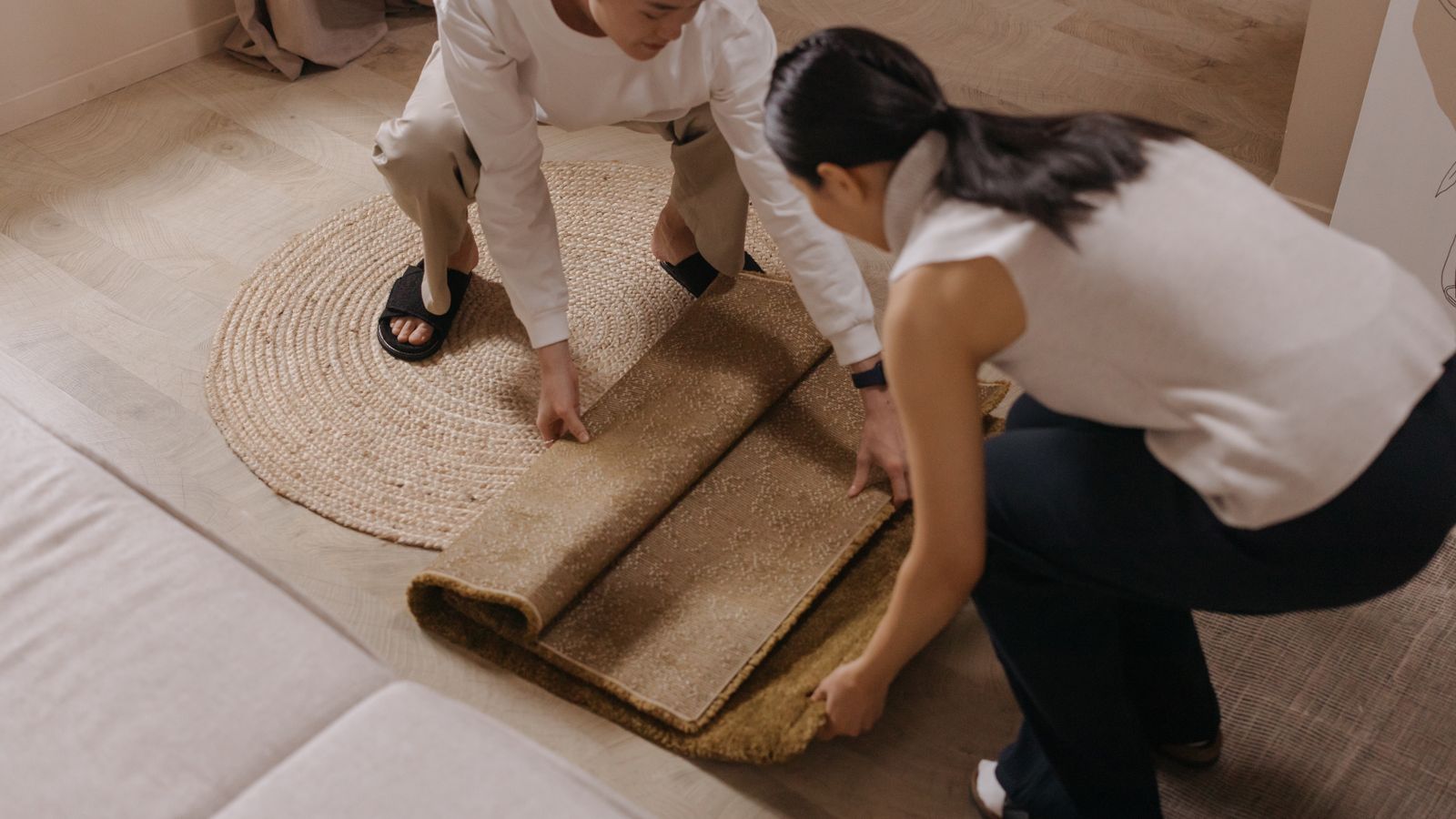
- Trim the underlay to size. Cut the pad so it sits about one to two inches smaller than the rug on all sides. This keeps the pad hidden under the rug edge, which both looks cleaner and prevents the pad from catching on furniture or feet.
- Position the pad on the floor. Lay the trimmed underlay flat in the exact spot where the rug will go, with the grip side (if it has one) facing down toward the floor.
- Lay the rug on top. Center the rug over the pad and smooth it out from the middle toward the edges to remove air pockets and wrinkles.
- Check the edges and corners. Press down along the rug’s perimeter to make sure the pad is not peeking out and that the rug lies flat with no curling.
- Add spot grippers if needed. If any corner still lifts or the rug shifts slightly when you walk on it, add a small piece of gripper tape at that corner rather than replacing the whole pad.
- Let it settle. New felt-rubber pads sometimes need a day or two of foot traffic to fully flatten out and bond with the rug backing. Avoid rolling up the rug again immediately after installation.
Choosing the Right Underlay: Key Buying Criteria
With so many pad types and sizes available, a few practical questions will narrow the field quickly.
What floor type will the rug sit on?
Hardwood and laminate floors need a rubber-backed pad that is specifically labeled safe for those finishes. Some inexpensive rubber pads contain additives that can yellow or stain a wood floor’s finish permanently, so this is not a place to cut corners.
Will the rug sit on top of carpet?
Rug-on-carpet setups need a thinner, grippier pad designed to keep two textiles from sliding against each other, rather than a thick cushioned pad meant for hard floors.
How much traffic does the room get?
Entryways, hallways, and living rooms benefit from a denser, more durable felt-rubber combination pad. Bedrooms and low-traffic guest rooms can usually get by with a lighter, cheaper option.
Do you need extra cushioning?
If the rug sits over a hard subfloor and comfort underfoot matters (for example, in a home office where you stand often), choose a thicker pad in the 1/4 inch to 3/8 inch range rather than a thin gripper mat alone.
Is the pad breathable?
A pad with some open weave or ventilation helps prevent moisture from getting trapped between the rug and floor, which matters in humid climates or homes near kitchens and bathrooms.
Caring for Your Rug Underlay
A rug pad is low-maintenance, but a little care keeps it performing well for years.
- Vacuum regularly through the rug. Dust and grit that settle into the pad over time reduce its grip and cushioning, so regular vacuuming of the rug also helps the pad underneath.
- Flip and air it out occasionally. Once or twice a year, lift the rug, air out both the pad and the floor beneath it, and wipe down the pad if it has picked up dust.
- Address spills promptly. If a spill soaks through the rug, blot it up quickly so moisture does not sit against the pad and floor. For rugs that see frequent spills, keeping a set of carpet stain pretreaters on hand makes cleanup faster and helps prevent stains from setting into both the rug and the pad below.
- Replace when it thins out or hardens. Felt and rubber pads compress and stiffen with years of foot traffic. Once a pad feels flat, brittle, or no longer grips the floor, it is time for a replacement rather than trying to stretch its life further.
- Check for residue on the floor. If you ever notice a sticky film or discoloration on the floor where the pad sat, switch to a different rubber formulation next time, since this usually signals the pad’s backing is breaking down.

Common Mistakes Beginners Make
A few recurring errors account for most of the complaints people have about rug pads:
- Buying a pad that is the same size as the rug, or larger. This leaves the pad visible around the edges and can cause it to bunch up or curl outward.
- Using the wrong pad for the floor type. A pad rated for carpet will not grip hardwood well, and vice versa.
- Skipping the pad on “just one rug.” Even a small entryway or bathroom rug benefits from a pad, since these areas often see the most sudden foot traffic and the highest risk of slipping.
- Ignoring floor-safety labeling. Always confirm a rubber pad is labeled safe for your specific floor finish before committing to it long-term.
- Never replacing an old, flattened pad. A pad that has lost its cushioning and grip is essentially doing nothing, even though it is still physically there under the rug.
Frequently Asked Questions
Do I really need an underlay if my rug already feels heavy and stays in place?
A heavy rug is less likely to slide immediately, but without a pad it will still wear faster, may curl at the corners over time, and offers no cushioning. An underlay is still worthwhile even for large, heavy rugs.
Can I cut a rug underlay myself?
Yes. Most pads can be trimmed with sharp household scissors or a utility knife. Lay the rug on top of the pad first and trace a rough outline about an inch inside the rug’s edge before cutting.
Will a rubber pad damage my hardwood floor?
A pad labeled safe for hardwood should not damage the finish. Avoid pads made from unspecified or recycled rubber blends without floor-safety labeling, since those are the ones most likely to cause discoloration.
How long does a rug underlay last?
With normal household traffic, a good-quality felt-rubber pad typically performs well for several years before it needs replacing. High-traffic areas may need a new pad sooner.
Can I use a rug gripper instead of a full underlay?
For small rugs, runners, or rugs layered over another rug, grippers alone can be enough. For larger rugs where cushioning and floor protection matter, a full underlay is the better long-term choice.
Do rug pads work under outdoor rugs?
Standard indoor felt-rubber pads are not designed for outdoor moisture exposure. Look specifically for pads labeled for outdoor or patio use if the rug will be exposed to weather.
Final Thoughts
A rug underlay is a small investment that solves several problems at once: it stops slipping, prevents curling, protects your floors, cushions your steps, and helps your rug last longer. Choosing the right material for your floor type, cutting it to the correct size, and giving it basic care over the years is really all it takes to get the full benefit. If you are shopping for a rug or refreshing your current setup, take a look at the current lineup of rug underlays, and consider pairing your choice with rug grippers for extra insurance at the corners – a simple combination that keeps rugs looking and performing their best for years.