
If your air fryer accessory drawer has turned into a jumbled pile of trays, racks, mats, and pans you rarely touch, you are not alone. Most people start with a handful of essentials and end up with a drawer that barely closes. The good news is that you can pare that collection down to a compact, highly functional set without sacrificing what your air fryer can actually do. This guide walks through exactly how to decide what stays, what goes, and how to keep your cooking versatility intact while reclaiming valuable kitchen storage space.
Why Your Accessory Drawer Gets Out of Control
Air fryer accessories multiply fast. A new recipe calls for a specific rack, a seasonal sale tempts you into a silicone pan set, and before long your drawer holds three overlapping tools that all do roughly the same job. Manufacturers also bundle accessories with new air fryer models, so if you have upgraded appliances over the years, you may be storing gear that no longer fits your current unit.
The result is a drawer where nothing sits flat, lids get bent, and you spend more time digging than cooking. Downsizing is not about giving up capability – it is about identifying which pieces earn their space and which ones are duplicates, mismatched, or simply unused.
Step 1: Pull Everything Out and Sort It
Start by emptying the drawer completely onto a counter or table. This single step reveals just how much overlap exists in most collections. Sort the items into three piles:
- Essentials – tools you use at least weekly and that fit your current air fryer model.
- Occasional – items used for specific recipes or holidays, but not part of your regular rotation.
- Rarely or never used – accessories that have not left the drawer in months, or that duplicate another tool’s function.
Be honest during this sort. If you cannot remember the last time you used something, it belongs in the “rarely used” pile, regardless of how much it cost.
Step 2: Identify the Accessories That Are Actually Essential
Most air fryer cooking can be handled with a surprisingly small toolkit. The pieces worth keeping are usually the ones that solve a problem the basket alone cannot:
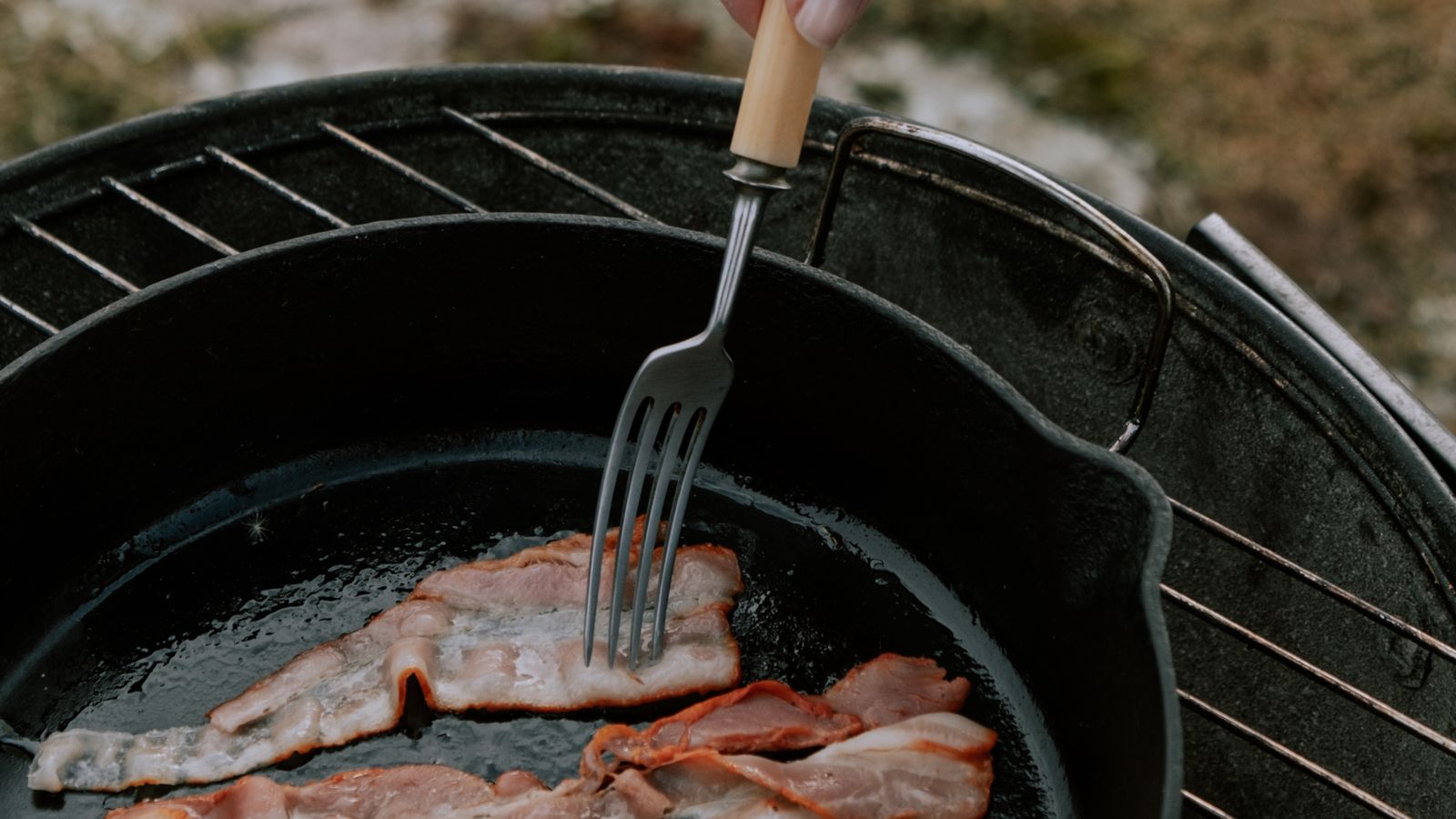
- A grill or bacon-style tray for foods that need fat to drain away, like bacon, sausage, or thicker cuts of meat. If you cook breakfast proteins often, a dedicated tray is one of the few specialty tools that genuinely earns its keep – see our roundup of air fryer bacon trays if yours is warped, scratched, or too small for your basket.
- A multipurpose baking pan or dish that can handle casseroles, cakes, and roasted vegetables in one shape.
- A set of skewers or a small rack if you regularly cook kebabs or want to stack food for better airflow.
- Silicone liners or parchment sheets for easy cleanup, since these take up almost no drawer space.
Everything else is a candidate for downsizing, especially if it duplicates one of these core functions.
Step 3: Cut Duplicate and Single-Use Tools
This is where most of your drawer space comes back. Look for accessories that only do one narrow job, especially if you rarely cook that dish. A dedicated egg-bite mold, a novelty-shaped cake pan, or a second grill tray that duplicates your primary one are all strong candidates for removal.
Pay close attention to items that are cracked, warped from heat, or missing a matching lid or base – these are safe to discard outright since they no longer perform reliably. If a tray or rack no longer sits flat in your basket, it is doing more harm than good.
Step 4: Choose Multi-Use Accessories Over Specialty Ones
The fastest way to shrink your drawer without losing function is to replace several single-purpose tools with fewer multi-use ones. A round baking pan with holes can handle roasted vegetables, reheated leftovers, and even bread. A flat rack can double as a cooling surface, a drip tray, or a base for skewers.
When you are ready to replace a bulky specialty pan, look for cookware that pulls double duty both inside and outside the air fryer. Many home cooks find that a versatile stovetop option, like one from our guide to frying pans under $50, can take over tasks that used to require a dedicated air fryer insert, freeing up drawer space entirely.
Step 5: Rethink How You Store What’s Left
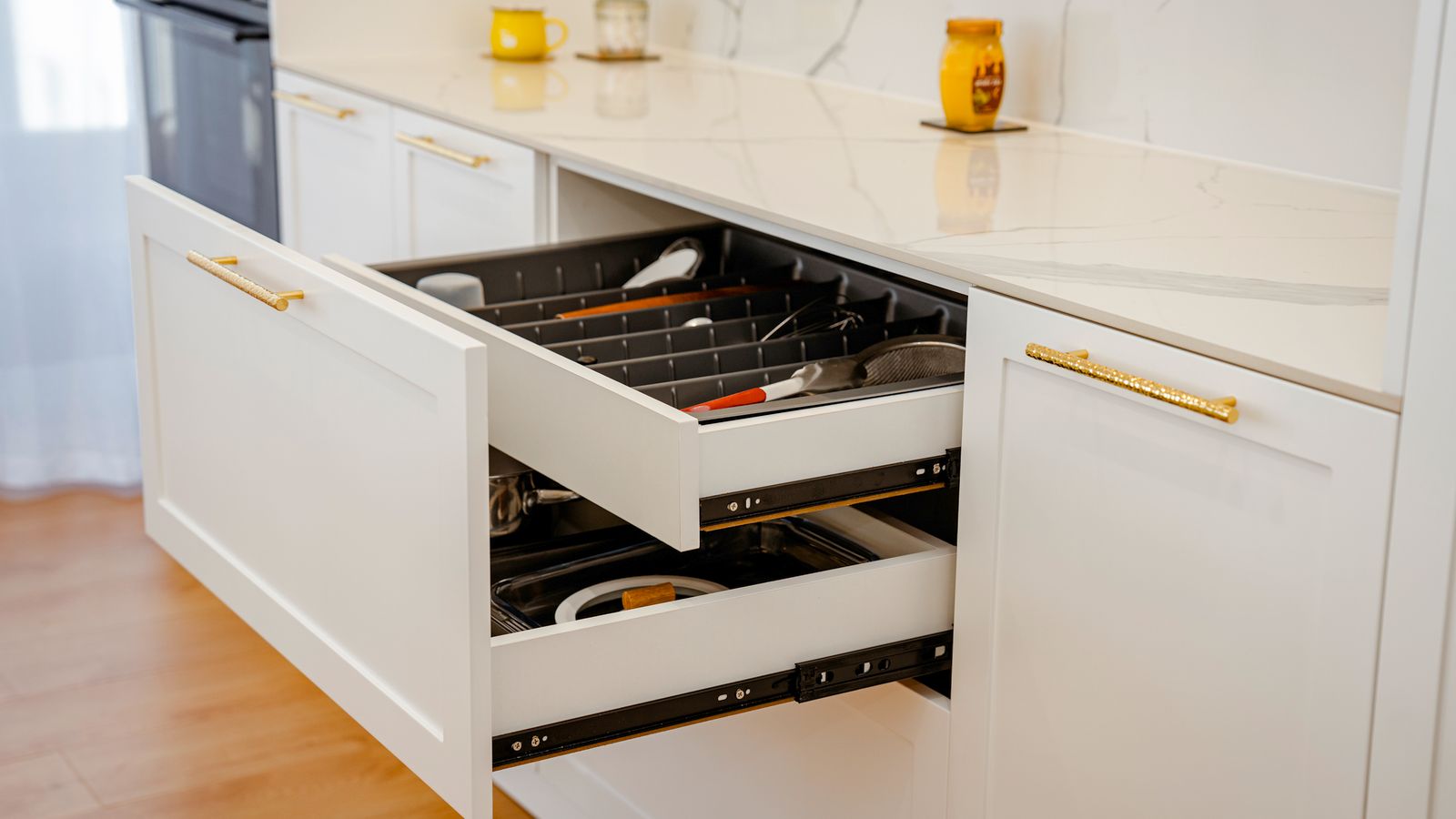
Once you have trimmed the collection, storage matters just as much as accessory count. Stack trays and racks of similar sizes together instead of stacking mismatched shapes, which wastes vertical space and makes items harder to pull out. A slim drawer divider or an upright organizer designed for bakeware can keep flat pans from sliding around.
Drying and storage go hand in hand. If your accessories are always damp when you put them away, they will warp faster and clutter your drawer with items that need extra air-drying time. Keeping a couple of drying mats for dishes near your sink makes it easy to fully dry trays and racks before they go back into a tight drawer, which also helps prevent mold and rust on metal accessories.
Step 6: Set a “One In, One Out” Rule
Downsizing only sticks if you prevent the drawer from refilling. A simple rule solves this: every time a new accessory comes in, an old one must go out. This keeps your collection at a manageable, intentional size and forces you to evaluate whether a new gadget is truly more useful than what you already own.
Multi-Use Accessory Tips to Maximize Function
- Choose trays with handles that also work as serving pieces, cutting down on separate dishes.
- Look for stackable racks that nest inside each other for storage but separate for double-layer cooking.
- Pick pans made from oven-safe materials so they can move between the air fryer, conventional oven, and stovetop.
- Favor accessories with silicone handles or removable parts, since they are easier to clean and store flat.
Common Mistakes to Avoid When Downsizing
- Keeping items “just in case.” If a tool has not been used in six months, it is unlikely to become essential next month.
- Getting rid of your primary basket liner or tray. Downsizing should target duplicates and specialty tools, not the core pieces you use daily.
- Replacing bulky accessories with more bulky accessories. Always compare new purchases against what they can replace, not just what they add.
- Ignoring accessory condition. Warped, cracked, or heat-damaged tools should be discarded even if you technically still use them, since they can affect cooking results and safety.
Frequently Asked Questions
How many accessories does an air fryer actually need?
Most cooks can get by with three to five core pieces: the basket that came with the unit, one grill or bacon-style tray, one multipurpose baking pan, and a set of liners. Everything beyond that should serve a specific, frequently used purpose.
Should I keep accessories that came bundled with my air fryer?
Only if they are genuinely useful. Bundled accessories are sometimes lower quality than standalone purchases and may not fit newer baskets if you have upgraded appliances. Test them against your actual cooking habits before assuming they deserve a permanent spot.
What is the best way to dispose of unwanted air fryer accessories?
Undamaged silicone and metal accessories can often be donated to thrift stores or given away locally. Warped or cracked pieces should be recycled according to your local guidelines rather than reused, since damaged cookware can affect airflow and cooking results.
Will downsizing my accessories limit what I can cook?
Not if you choose multi-use tools carefully. A well-chosen baking pan, tray, and rack combination can cover the vast majority of air fryer recipes, from roasted vegetables to proteins to baked goods, without needing a separate tool for every dish.
How often should I reassess my accessory drawer?
A quick review every few months is enough to catch new duplicates before they pile up. Pair this with the “one in, one out” rule so your drawer stays at a manageable, functional size year-round.