
A cluttered cabinet full of mismatched lids, scratched nonstick pans, and pots you never use is more than an eyesore – it slows down every meal you cook. If you have recently invested in a budget-friendly set or picked up specialty pieces for a glass cooktop, a little organization goes a long way toward protecting that investment and making your kitchen actually enjoyable to work in. This guide walks you through a practical system for sorting, storing, and maintaining your cookware collection so everything has a place and nothing gets damaged.
Why Organizing Your Cookware Collection Matters
Most home cooks accumulate cookware gradually – a hand-me-down skillet here, a stockpot bought for a single recipe there, and eventually a starter set purchased to fill the gaps. Over time, this mix becomes hard to manage. Pieces get stacked without protection, lids go missing, and pans with specialized coatings end up scratched by heavier pots sitting on top of them.
Good organization solves several problems at once. It protects nonstick and enamel coatings from scuffs, makes it faster to find the right pan when you are mid-recipe, and helps you actually see what you own so you stop buying duplicates. It also extends the life of budget-conscious pieces, which matters if you built your collection around affordable cookware sets under $100 rather than premium individual pans.
For anyone cooking on a glass or induction range, organization has an extra layer of importance: cooktop-specific cookware often has flat, polished bottoms that scratch or warp if stored carelessly, and mixing compatible pans with incompatible ones can lead to confusion at dinnertime.
Start by Sorting Your Collection Into Categories
Before you buy a single organizer, empty every cabinet and drawer that holds cookware and lay everything out on a counter or table. This step feels tedious, but it is the only way to see the full scope of what you own. Sort pieces into simple groups:
- Everyday essentials – the skillet, saucepan, and stockpot you reach for constantly.
- Occasional-use pieces – griddles, roasting pans, or large stockpots used a few times a month.
- Specialty or cooktop-specific pieces – cookware bought specifically for a glass or induction surface.
- Lids – grouped separately so you can match them to the correct pots later.
- Duplicates or damaged pieces – anything warped, heavily scratched, or redundant that should be donated or discarded.
This sorting pass usually reveals more overlap than expected. Many home cooks discover they own two or three pans that do the same job, which frees up real cabinet space once you decide which to keep.
Match Storage Method to Cookware Type
Not all cookware should be stored the same way, and matching the right storage method to each piece prevents damage over time.
Budget Cookware Sets
Sets purchased to be affordable and complete – often the appeal of cookware sets under $100 – usually include stacking pieces designed to nest together. Use the included pan protectors, or felt pads cut to size, between each piece before stacking so nonstick and enamel surfaces are not scraping against metal rims. If your set did not come with protectors, a few dollars’ worth of felt pan separators from a kitchen store will do the job.
Glass Cooktop and Induction-Specific Pieces
Cookware chosen for its flat, smooth base – as with cookware for glass cooktops or cookware for induction cooktops – deserves the most careful handling. The polished bottoms that make these pans compatible with a glass surface are also the most prone to scratching if they are dragged across a cabinet shelf or stacked directly on top of rougher cast iron. Store these pieces on their own shelf, ideally lying flat rather than nested inside dissimilar pans, and always place a soft liner beneath the bottom-most pan.
Cast Iron and Heavy Pieces
Because cast iron is dense and can scratch lighter cookware, keep it in its own zone – a lower cabinet or a dedicated shelf – rather than stacking it with your everyday nonstick pans or your cooktop-specific set.
Step-by-Step: Organizing Your Cabinet or Drawer
- Empty and clean the storage space. Wipe down shelves or drawer liners before putting anything back – crumbs and grease buildup are common in cookware cabinets.
- Measure your available space. Note the height, width, and depth of each cabinet or drawer so you know what organizers will actually fit.
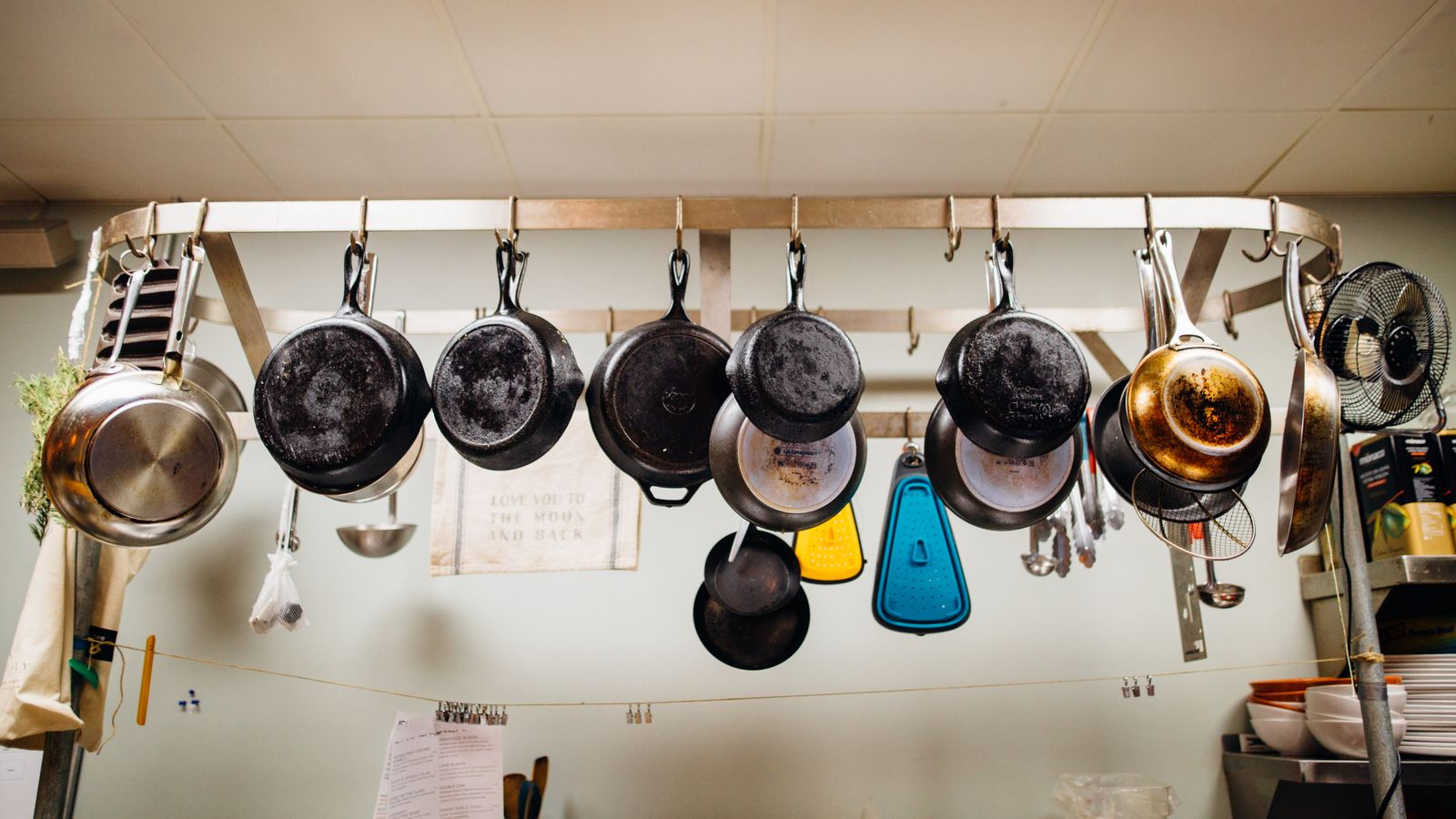
- Choose an organizing method. Vertical dividers work well for a deep lower cabinet, a pull-out drawer system suits kitchens with the cabinetry for it, and a wall-mounted pot rack is a good option if you are short on cabinet space entirely.
- Group by frequency of use. Place everyday essentials at eye level or in the most accessible drawer, and move occasional-use pieces to a higher shelf or the back of a cabinet.
- Separate cooktop-specific cookware. Give your glass-cooktop or induction pieces their own labeled shelf so they never get stacked under something that could scratch the base.
- Add protective layers. Slide a felt or fabric pan protector between every stacked pair of pots or pans, regardless of material.
- Store lids separately. Use a lid organizer, a vertical rack, or simply stand lids upright in a bin rather than piling them loose on top of pots.
- Label shelves if multiple people cook in the household. A simple label prevents pans from drifting back into the wrong spot after being washed.
- Do a final walkthrough. Open every drawer and cabinet once more to confirm nothing is wedged in a way that risks scratching or bending during removal.
Tips for Keeping Your System Working Long-Term
- Reassess your storage every few months, especially after adding new pieces – a system that worked for five pans may not work for eight.
- Dry cookware fully before stacking it; trapped moisture between stacked pans can lead to rust spots on cast iron or a musty smell in enclosed cabinets.
- Keep a small notepad or phone note listing what you own, so you avoid buying a duplicate of a pan that is simply stored somewhere you forgot about.
- If your kitchen has limited cabinet space, consider a hanging pot rack for everyday pieces – it keeps them accessible while freeing up cabinets for cooktop-specific cookware that needs more careful, flat storage.
- Reline shelves with a fresh non-slip mat periodically; older liners can compress and lose their cushioning ability.
Common Mistakes to Avoid
- Stacking cookware without protection. Even a few uses of bare metal-on-metal stacking can leave visible scratches on nonstick or enamel coatings.
- Mixing cooktop-specific pans with rougher cookware. Storing a glass-cooktop-friendly pan beneath a cast iron skillet is one of the fastest ways to damage its polished base.
- Ignoring lids. Loose lids piled on top of pots are a common source of dents and chips, and they make it harder to find a matching lid quickly.
- Storing everything in one deep cabinet. Burying occasional-use pans behind everyday ones means constant digging and a higher chance of dropping something.
- Skipping the sorting step. Buying organizers before sorting often means purchasing the wrong size or style for what you actually own.
Frequently Asked Questions
How much space do I need to organize a full cookware set?
A typical set built around an affordable price point usually fits in one deep lower cabinet plus a shallow drawer for lids, though the exact footprint depends on how many pieces the set includes.
Can I stack cookware for a glass cooktop with my other pans?
It is best to avoid this. The flat, polished bases on cookware made for glass or induction surfaces scratch more easily than typical cookware, so giving these pieces their own shelf protects the surface that makes them compatible with your cooktop in the first place.
What is the best way to store lids?
A vertical lid organizer or a dedicated bin keeps lids upright and prevents them from scratching the pots they sit on top of. Matching lids to pots by size before storing also saves time during cooking.
Should I keep cast iron with the rest of my cookware?
Cast iron is heavier and more abrasive than most other materials, so it is best kept on its own shelf rather than nested with nonstick or enamel pieces.
How often should I reorganize my cookware collection?
A quick check every few months is usually enough, especially after adding new pieces or noticing that certain pans have become harder to reach.
Do I need special organizers, or can I use what I already have?
Many kitchens can get by with simple felt pan protectors, a repurposed drawer divider, or an inexpensive pot rack. Specialized organizers help in tight spaces, but they are not required to keep a collection tidy.
Final Thoughts
Organizing your cookware collection is one of those small kitchen projects that pays off every single day. By sorting your pieces, matching storage methods to what each pan actually needs, and keeping cooktop-specific cookware separated from the rest, you protect your investment and make cooking noticeably less frustrating. Whether your collection is built around a budget-friendly set or pieces chosen specifically for a glass or induction range, a little structure now means less wear and tear – and less searching through cabinets – for years to come.