
When two people share one air fryer, it works overtime. Wings on game night, weeknight salmon, reheated leftovers, breakfast potatoes – a couples’ kitchen puts a single basket through far more cycles than a single-person household ever would. That extra mileage means oil residue, smoke, and stubborn odors build up faster than the manual’s “wipe it down occasionally” advice accounts for. A proper deep clean isn’t just about looks; it protects the heating element, keeps food tasting the way it should, and extends the life of an appliance you’re both relying on daily.
This guide walks through a full deep-clean process for a heavily used air fryer, the tools you need, the mistakes that shorten an air fryer’s lifespan, and how to build a cleaning routine that actually fits two busy schedules. If your current unit is nearing the end of its life or you’re shopping around, our roundup of air fryers for couples is a useful place to compare models built for two-person households.
Why a Two-Person Air Fryer Needs More Than a Quick Wipe
A single-person air fryer might run two or three times a week. In a shared kitchen, it’s common to run the same basket for dinner, then again for a late-night snack, then again the next morning – sometimes without a full cool-down in between. That frequency means:
- Oil residue compounds faster. Each cook leaves a thin film; skip a few cleanings and it turns into a sticky, baked-on layer that’s much harder to remove.
- Smoke and odor accumulate. Grease that isn’t cleaned off will smoke on the next high-heat cook, and that smell transfers into whatever you’re cooking next.
- The heating element gets coated. Splattered oil can settle on the coil, reducing efficiency and, in worse cases, becoming a small fire risk.
- Shared use means shared responsibility. When two people are using the same appliance, cleaning routines can quietly fall through the cracks unless there’s a clear system.
Deep cleaning on a regular schedule – not just when something looks visibly dirty – keeps performance consistent and avoids the “why does everything taste smoky” conversation.
Tools and Materials You’ll Need
Most of what you need for a proper deep clean is already in your kitchen:
- Warm water and mild dish soap
- A soft-bristle brush or old toothbrush (for tight corners and vents)
- A non-abrasive sponge (avoid steel wool or scouring pads on non-stick coatings)
- Baking soda (for baked-on grease)
- White vinegar (for odor removal and mineral deposits)
- Microfiber cloths, at least two – one for washing, one for drying
- A soft toothpick or bamboo skewer (for clearing vents and crevices)
Avoid dishwasher detergent tablets or anything containing bleach directly on non-stick surfaces – they can strip the coating over time.
Step-by-Step Deep Clean Process
- Unplug and cool down. Always start with the unit fully unplugged and completely cooled. Never clean an air fryer that’s still warm – it’s both a burn risk and can warp non-stick coatings if cold water hits a hot basket.
- Remove all removable parts. Take out the basket, tray, and any inserts (racks, dividers, skewers) you both use regularly. Check the manual to confirm which parts are dishwasher-safe versus hand-wash only.
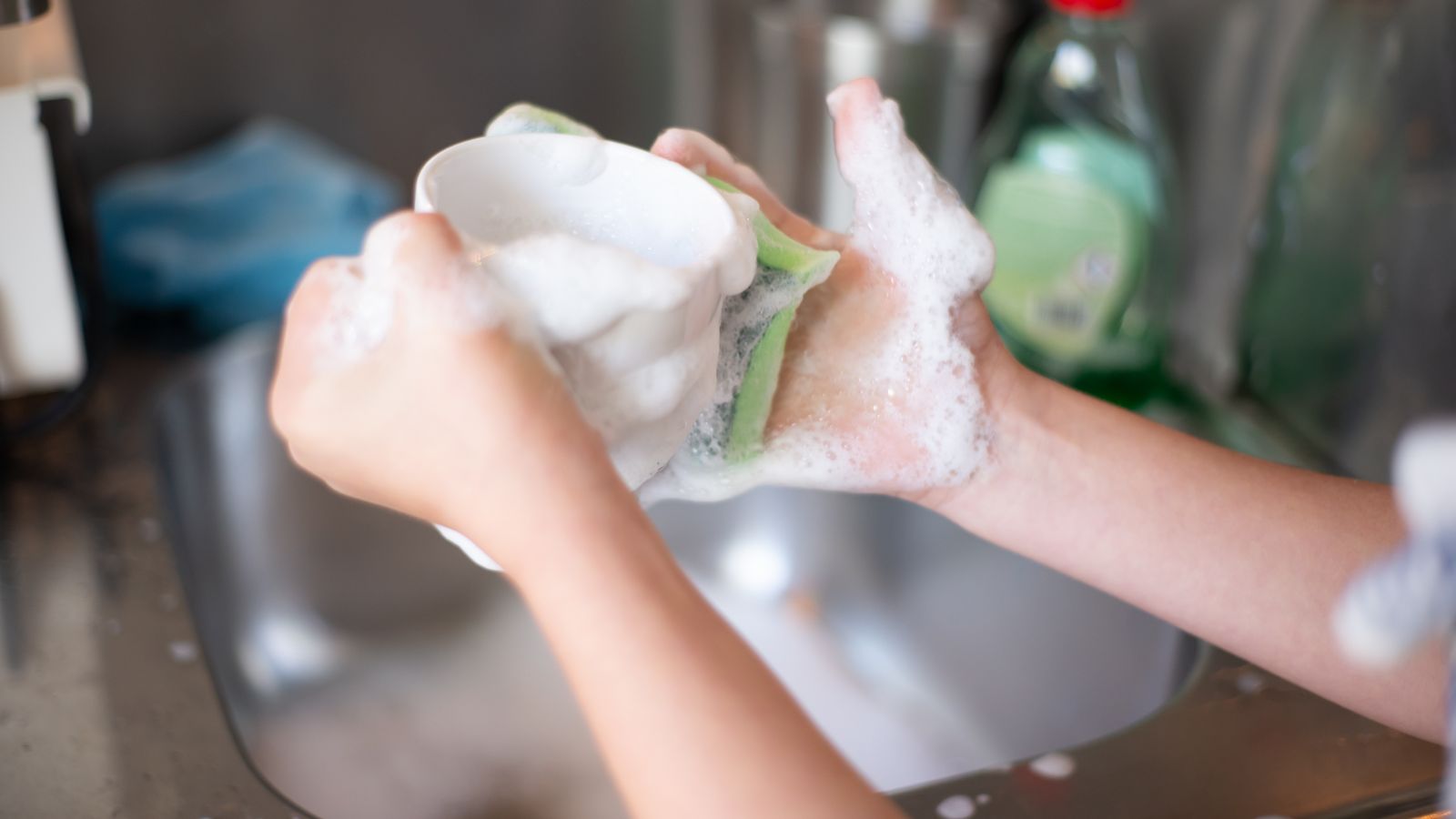
- Soak the basket and tray. Fill the sink or a large basin with warm water and a few drops of dish soap. Let the basket and tray soak for 10-15 minutes to loosen baked-on residue before scrubbing.
- Scrub with a soft sponge. Wipe down all surfaces with a non-abrasive sponge, working in circular motions. For stuck-on grease, sprinkle a little baking soda directly onto the spot and let it sit for a few minutes before scrubbing.
- Clean the vents and crevices with a brush. Use a soft-bristle brush or toothbrush to reach the small gaps around the basket’s release mechanism and the tray’s edges, where crumbs and oil tend to collect unnoticed.
- Wipe down the interior chamber. With the unit unplugged, use a damp cloth (not soaking wet) to wipe the interior walls and heating element area. Never submerge the main unit in water – only the removable parts should get wet.
- Address lingering odors. If the basket still smells smoky after washing, mix a solution of equal parts water and white vinegar, wipe it over the interior surfaces, and let it air out for 15-20 minutes before rinsing and drying.
- Dry everything thoroughly. Use a microfiber cloth to dry all parts completely, then let them air-dry fully before reassembling. Trapped moisture is one of the most common causes of mold and lingering odors in shared appliances.
- Wipe the exterior and control panel. Use a barely damp cloth on the outer housing and control panel – never spray liquid directly onto buttons or digital displays.
- Reassemble and do a dry run. Once everything is dry, put the basket and tray back in place and run the unit empty for 3-5 minutes at a moderate temperature to make sure it’s fully dry and odor-free before the next cook.

Building a Cleaning Routine for Two
The easiest way to keep a shared air fryer in good shape is to split the responsibility clearly rather than leaving it to whoever notices the mess first:
- Quick wipe after every use. Whoever cooks last does a 30-second wipe of the basket once it’s cool – this alone prevents most buildup.
- Weekly deep soak. Set one day a week (Sunday works well before meal prep) for a full soak-and-scrub of the basket and tray.
- Monthly full deep clean. Once a month, follow the complete step-by-step process above, including the interior wipe-down and vinegar odor treatment.
- Shared checklist. A sticky note or shared phone reminder helps when two people are rotating cooking duties – it removes the guesswork about whose “turn” it is.
If your household leans heavily on the air fryer for batch cooking – wings for two, meal-prepped proteins, or weekend get-togethers – cleaning frequency should scale up accordingly. Our guide to air fryers for batch wings covers models designed to handle that kind of heavy, repeated use without excessive residue buildup.
Common Mistakes to Avoid
- Using metal utensils or abrasive scrubbers. These scratch non-stick coatings, which then flake and shorten the basket’s usable life.
- Submerging the main unit. Only removable parts should touch water – the base with the heating element and electronics must stay dry.
- Skipping the vents. Grease and crumbs that collect in air vents restrict airflow and can trigger smoking on the next cook.
- Cleaning while still warm. Sudden temperature changes can warp baskets and trays, especially non-stick coated ones.
- Letting parts air-dry with moisture trapped in corners. Always tip the basket to check for pooled water in seams before reassembling.
- Ignoring the control panel. Grease film on buttons or a touchscreen can make controls sticky or unresponsive over time – a light wipe prevents that.
Signs It’s Time for More Than a Cleaning
Sometimes buildup isn’t the real problem – the basket coating has simply worn out. Watch for:
- Flaking or peeling non-stick coating, even after gentle cleaning
- Persistent smoky smell that doesn’t go away after a vinegar treatment
- Food sticking noticeably more than it used to, despite proper cleaning
- Visible warping of the basket or tray
If you’re seeing these signs, it may be time to replace the basket or consider upgrading the whole unit. For couples who cook often and want a model built to handle frequent use with less maintenance hassle, browsing air fryers for couples is a good starting point – many current models feature dishwasher-safe baskets that cut down on manual scrubbing significantly.
Deep Cleaning for Meal Prep Households
If your air fryer doubles as a meal-prep tool – batch-cooking proteins and vegetables for the week ahead – residue buildup happens even faster because you’re often running back-to-back cycles with different foods. Cross-contamination of flavors (think fish followed by dessert) is a real issue if the basket isn’t cleaned thoroughly between different types of cooking. For households in this situation, it’s worth looking at air fryers for meal preppers that offer larger capacity and easier-to-clean baskets, reducing how often you need to do a full deep clean between different food types.
Frequently Asked Questions
How often should a shared air fryer be deep cleaned?
For a two-person household using it several times a week, a full deep clean once a month is a good baseline, with a lighter soak-and-scrub weekly and a quick wipe after every use.
Can I put the basket in the dishwasher?
Many modern baskets are dishwasher-safe, but always check your specific model’s manual first. Even dishwasher-safe parts benefit from an occasional hand deep clean to reach tight corners the dishwasher may miss.
Is vinegar safe to use on non-stick coatings?
Yes, a diluted water-and-vinegar solution is safe for most non-stick surfaces and is effective for cutting through odors, as long as you rinse thoroughly afterward and avoid using it at full strength.
Why does my air fryer smell smoky even after cleaning?
Lingering smoke smell usually means residue is trapped in the vents or heating element area, not just the basket. Make sure you’re cleaning the interior chamber and vents, not only the removable parts.
What’s the biggest cleaning mistake couples make?
Assuming a quick rinse is enough because the basket “looks” clean. Oil residue is often invisible until it’s baked on, which is why a scheduled deep clean matters more than a visual check.
Final Thoughts
A shared air fryer earns its keep in a two-person household, but that frequent use means cleaning can’t be an afterthought. Building a simple routine – quick wipes after every use, a weekly soak, and a monthly deep clean – keeps performance consistent, prevents odors from transferring between meals, and protects your investment for years of shared cooking. If your current basket is showing real wear despite good care, it may be time to explore newer options built specifically for busy two-person kitchens.