
If your countertop is shrinking and your air fryer accessory drawer is overflowing, you have probably landed on two very different solutions: an air fryer wall shelf and an air fryer rotisserie fork. They sound unrelated at first glance, but both promise to make air frying easier, and both come up constantly when cooks are trying to decide what to buy next. The problem is that they solve completely different problems, so picking the wrong one first can leave you no better off than when you started.
This guide breaks down exactly what each accessory does, how they differ in purpose and installation, and how to figure out which one deserves your money first. By the end, you will have a clear, numbered decision process instead of a guessing game.

What an Air Fryer Wall Shelf Actually Does
An air fryer wall shelf is a mounted or floating platform, usually rated for 30-60 pounds, that gets your air fryer off the counter entirely. Instead of taking up prime workspace next to your stove, the unit sits at a fixed height on the wall, freeing up the counter below for prep work, other appliances, or simply breathing room.
This is a storage and workspace solution, not a cooking accessory. It does not change how your food cooks, what temperatures you can reach, or how evenly your basket circulates air. It changes where the appliance physically lives in your kitchen. For renters, small apartments, or anyone with a single narrow counter run, that space-saving effect can be the difference between using the air fryer daily and shoving it in a closet after a month.
Installation typically involves anchoring into wall studs or using heavy-duty drywall anchors, then either sliding the appliance onto a bracket or setting it on a reinforced ledge. Weight capacity, wall material, and clearance above the shelf for lid opening and steam venting are the details that matter most when shopping.
What an Air Fryer Rotisserie Fork Does
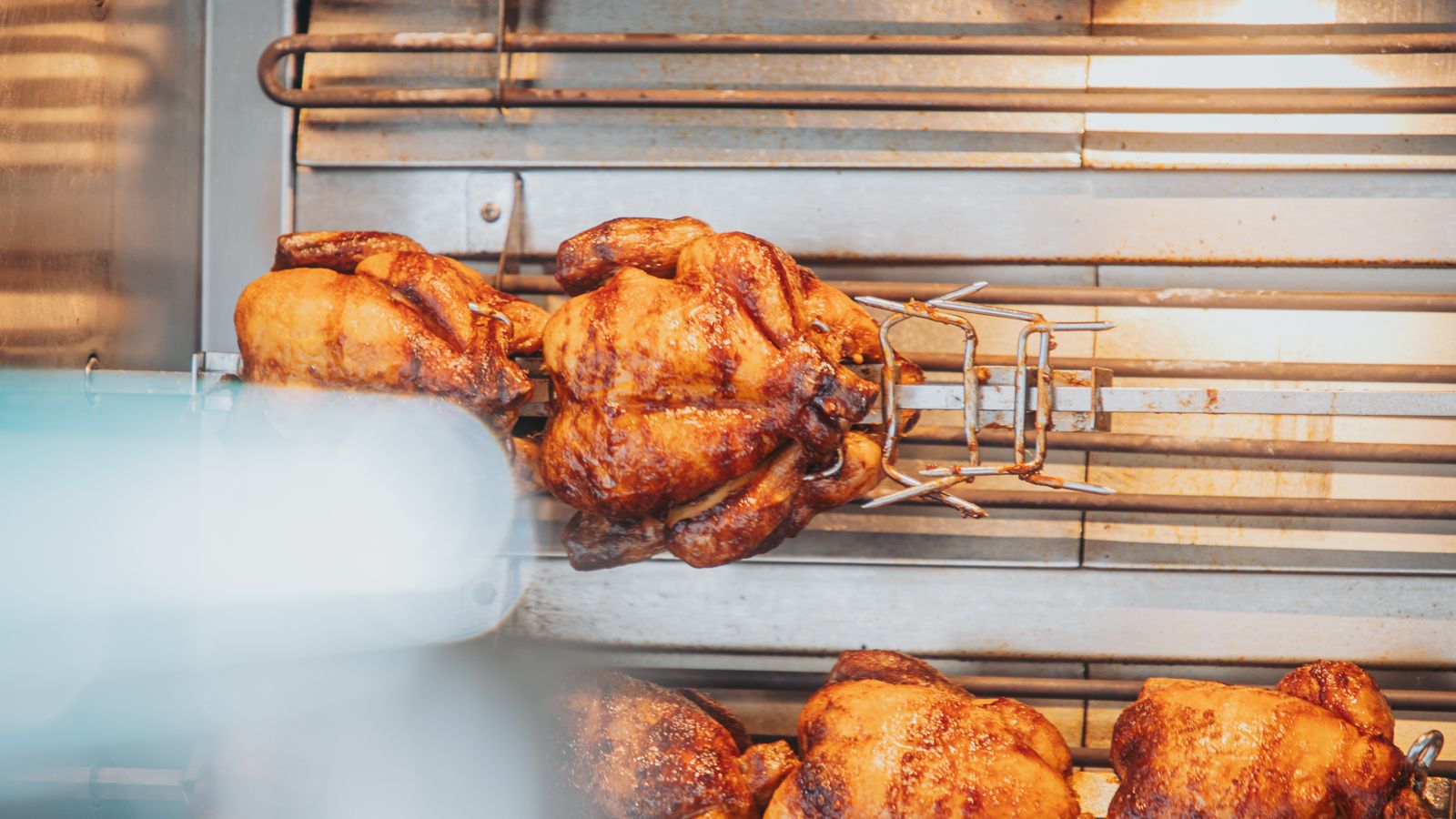
An air fryer rotisserie fork is a cooking accessory, not a storage solution. It is a set of metal prongs, usually sold in pairs, that skewer a whole chicken, roast, or other cut of meat and lock it onto a rotisserie spit inside air fryers that have a rotisserie function built in. As the spit turns, the fork keeps the food centered and secure so it self-bastes evenly on all sides instead of sitting flat in a basket.
This accessory only works if your air fryer already has a rotisserie mode and spit attachment. It will not fit a basket-only model, and it will not create rotisserie function on an appliance that was not built with one. Its entire purpose is improving how a specific type of food cooks: better browning, more even fat rendering, and a genuinely spinning-rotisserie texture that a static basket cannot replicate.
Key Differences at a Glance
- Purpose: Wall shelf saves counter space; rotisserie fork improves cooking results for whole cuts of meat.
- Compatibility: Wall shelf works with almost any air fryer as long as weight and dimensions match; rotisserie fork only works with rotisserie-capable models that include a spit.
- Installation: Wall shelf requires wall mounting hardware and a permanent or semi-permanent fixture; rotisserie fork requires no installation, just insertion into the spit each time you cook.
- Impact on cooking: Wall shelf has zero effect on food; rotisserie fork directly changes texture, juiciness, and browning of rotisserie-style meals.
- Cost range: Both are inexpensive relative to the appliance itself, but a wall shelf is a one-time kitchen investment while a rotisserie fork is a recurring-use tool tied to specific meals.
How to Decide Which One You Need First: A Step-by-Step Process
Rather than buying both and hoping one gets used, walk through these steps in order.
- Check your air fryer model for a rotisserie function. Open the manual or look at the unit itself for a spit socket and rotisserie switch. If there is no rotisserie mode, a rotisserie fork is off the table entirely, and your decision is already made in favor of the wall shelf if space is an issue.
- Assess your counter space honestly. If you are moving the air fryer on and off the counter daily, tripping over the cord, or it is crowding your prep zone, that is a real, everyday friction point. A wall shelf solves a problem you deal with every single time you cook.
- Think about how often you cook whole meats. If rotisserie chicken, small roasts, or kebabs are a regular part of your meal rotation and your appliance supports it, the fork upgrade pays off in noticeably better texture almost immediately.
- Compare frequency of the underlying pain point. A cramped counter is a daily annoyance. A subpar rotisserie result only shows up on the days you actually use that function. Whichever problem you hit more often should win the tiebreaker.
- Check the wall shelf’s weight rating against your exact air fryer’s weight, including the basket and any accessories left inside. Underestimating this is the most common mistake buyers make.
- If both problems apply equally, buy the lower-cost, lower-commitment item first. A rotisserie fork is usually cheaper and requires no wall modification, making it the easier trial purchase before committing to mounting hardware.
Tips for Getting the Most Out of Either Accessory
If you decide on a wall shelf, measure the exact footprint of your air fryer, including the handle and any side vents, before ordering. Leave at least 6 inches of clearance above the shelf so you can fully open the lid or pull out the basket without hitting the cabinet above. Always mount into studs when possible; drywall anchors alone are rarely rated for the combined weight of a full-size air fryer.
If you decide on a rotisserie fork, make sure the prongs match your spit’s shaft diameter, and tighten them firmly against the meat so it does not slip and wobble mid-cook, which causes uneven cooking and can strain the rotisserie motor. Trussing the meat with kitchen twine before skewering also helps keep it compact and centered.
Common Mistakes to Avoid
- Buying a wall shelf without checking weight capacity against your specific model. Air fryers with large baskets can be heavier than expected once loaded, and a shelf rated too low is a real safety hazard.
- Buying a rotisserie fork before confirming your air fryer has a rotisserie function. This is the single most common wasted purchase in this comparison, since the two accessories look similar in online listings but serve opposite needs.
- Ignoring ventilation clearance when wall-mounting. Air fryers vent hot air and steam; mounting too close to cabinets or too low can trap heat and create a fire risk.
- Assuming one accessory replaces the need for the other. They solve different problems entirely, and many kitchens genuinely benefit from both over time.

What to Pair With Each Accessory
Once you have chosen your primary accessory, a few complementary purchases round out the setup. If you went with a air fryer wall shelf, look at how it interacts with the rest of your counter workflow, including where you will land hot baskets after cooking. If you went with a air fryer rotisserie forks, having a solid landing spot for the finished spit matters just as much as the fork itself, since resting hot rotisserie meat directly on a plate can be awkward without the right tool. Many cooks also add air fryer serving baskets to move food from the fryer straight to the table without extra dishes, which pairs naturally with either upgrade.
Frequently Asked Questions
Can I use a wall shelf and a rotisserie fork together?
Yes. They are not competing accessories; a wall-mounted air fryer with rotisserie capability can absolutely use a rotisserie fork during cooking. The shelf only affects where the appliance sits, not how it functions once you press start.
Do all air fryers support a rotisserie fork?
No. Only models built with a rotisserie spit attachment and dedicated rotisserie setting can use one. Check your specific model’s included accessories and manual before buying a fork separately.
Is a wall shelf safe for heavier air fryers?
It can be, as long as the shelf’s stated weight capacity comfortably exceeds your air fryer’s full loaded weight and it is anchored into studs rather than drywall alone. Always check the manufacturer’s rated capacity rather than estimating.
Which accessory should a beginner buy first?
If counter space is a daily struggle, start with the wall shelf since it solves an everyday problem. If you already have ample counter space but want better results from whole-meat cooking, start with the rotisserie fork instead.
Do rotisserie forks work with all sizes of meat?
They work best with cuts sized to fit your air fryer’s internal chamber and spit length. Very large roasts may not clear the heating element, so check your appliance’s maximum rotisserie capacity before buying a big cut for the occasion.